
 Image 1 of 1
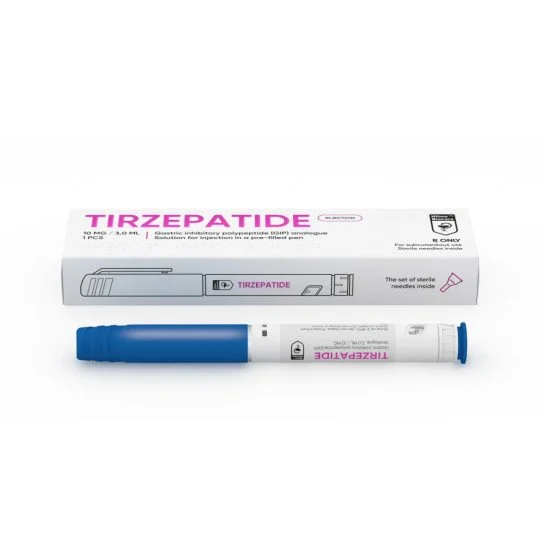
Tirzepatide is a dual agonist of the GIP and GLP-1 receptors. Tirzepatide is an analogue of gastric inhibitory polypeptide (GIP), a human hormone that stimulates insulin release from the pancreas. Tirzepatide is a linear polypeptide of 39 amino acids, chemically modified by lipidation to improve its cellular uptake and metabolic stability.
Indication
Treatment of type 2 diabetes mellitus and weight loss. Tirzepatide is used to improve glycemic control in combination with diet and exercise.
Mechanism of Action
Tirzepatide has a higher affinity for GIP receptors than for GLP-1 receptors, and this dual agonist action provides a more pronounced reduction in hyperglycemia compared to a selective GLP-1 receptor agonist. Tirzepatide mimics the action of natural GIP on the GIP receptor. At the GLP-1 receptor, tirzepatide preferentially forms cAMP (a messenger involved in the regulation of glycogen, sugar, and lipid metabolism) rather than attracting beta-arrestin. This combination of its preference for the GIP receptor and the specific signaling properties of GLP-1 increases insulin secretion. Tirzepatide increases levels of both adiponectin and adipokine, which are involved in the regulation of both glucose and lipid metabolism, with a maximum increase of 26% from baseline after 26 weeks at a dose of 10 mg.
Tirzepatide is a dual agonist of the GIP and GLP-1 receptors. Tirzepatide is an analogue of gastric inhibitory polypeptide (GIP), a human hormone that stimulates insulin release from the pancreas. Tirzepatide is a linear polypeptide of 39 amino acids, chemically modified by lipidation to improve its cellular uptake and metabolic stability.
Indication
Treatment of type 2 diabetes mellitus and weight loss. Tirzepatide is used to improve glycemic control in combination with diet and exercise.
Mechanism of Action
Tirzepatide has a higher affinity for GIP receptors than for GLP-1 receptors, and this dual agonist action provides a more pronounced reduction in hyperglycemia compared to a selective GLP-1 receptor agonist. Tirzepatide mimics the action of natural GIP on the GIP receptor. At the GLP-1 receptor, tirzepatide preferentially forms cAMP (a messenger involved in the regulation of glycogen, sugar, and lipid metabolism) rather than attracting beta-arrestin. This combination of its preference for the GIP receptor and the specific signaling properties of GLP-1 increases insulin secretion. Tirzepatide increases levels of both adiponectin and adipokine, which are involved in the regulation of both glucose and lipid metabolism, with a maximum increase of 26% from baseline after 26 weeks at a dose of 10 mg.